
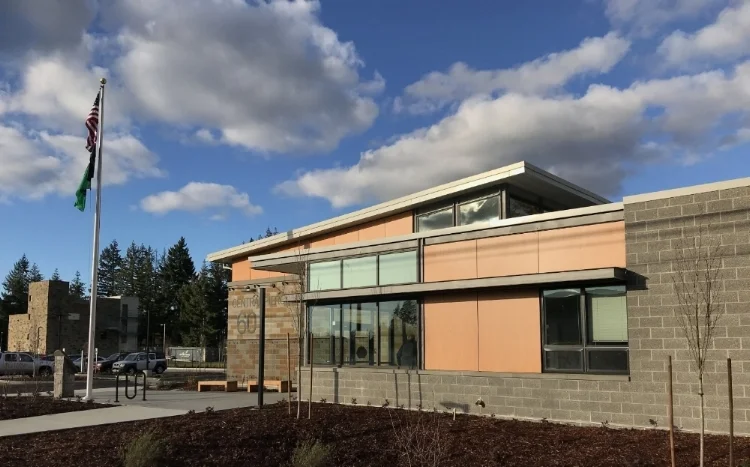
At TCA, we love seeing the way our projects have a positive and lasting impact on the community. Recently, The News Tribune wrote an article featuring one of our projects and the benefits it's having on Central Pierce Fire & Rescue Station 60 and the surrounding areas in Pierce County.
Read More
Firehouse Magazine Article Contribution : Confronting Fire Department Diesel Exhaust Exposure Concerns—Part 3: Determining Exposure Sources
"In Part 3 of this 6-part series, we examine the first and perhaps most critical step in managing exposure to diesel exhaust and carcinogenic/chemical hazards in your facilities. The initial evaluation of your operation should consider your safety management systems, as discussed in Part 2, and should also address the physical layout and condition of your station, the age and condition of your apparatus, and concerns expressed by your firefighters, union or community.
The late comic Irwin Corey once stated, “If we don’t change direction soon, we will end up where we are going.” Well, we have finally changed direction, in the sense that firefighter safety and contaminant awareness is one of the top concerns not only of responders but also of decision makers. However, given that we’ve changed direction in our awareness, how do we go further to change the direction of our decisions and actions and their consequences? Where do we go with our increased awareness?"
-Firehouse Magazine
Read More
Firehouse Magazine Article Contribution : Station Design Supplement
Brian Harris Shares His Thoughts with Firehouse Magazine on Embracing Technology in Station Design
"Fire stations are among the most complex, heavily used municipal buildings found anywhere. Simultaneously, they are garages housing millions of dollars’ worth of apparatus; they are dormitories; and they have expansive kitchens, training rooms and public meeting facilities as well as administrative office space.
And, they are expected to last decades – sometimes under around-the-clock, heavy-duty service. That’s why it is important to ensure they are designed for the purpose in which they are intended and built using the best materials available.
Firehouse® Magazine interviewed several architects to compile their comments on best practices for how to design and build a fire station for today’s (and tomorrow’s) fire service needs. They were unanimous in their appraisals and comments – hire professionals with experience building complex, purpose-built fire stations; your community will be better off for it and future generations will be thankful you did."
Read More
Firehouse Magazine Article Contribution : 10 Tips For Selecting A Fire Station Site
"Selecting the right piece of land for a new fire station is among the most important decisions to be made when designing a new facility. A station’s location is a key element to providing effective service based on both current and future service demands driven by actual and projected hazards and risks."
"Beyond the geographical location, more immediate contextual features affect the suitability of a site, such as access to arterials, traffic, terrain, available utilities and the general density and character of the targeted surroundings. Evaluating and acquiring property for a future fire station can be a complex and lengthy process."
Read More
City of Boise Fire Station 4 : 2017 FIREHOUSE MAGAZINE STATION DESIGN AWARDS SILVER CAREER 2 AWARD
City of Boise Fire Station 4
"Taking direction from city staff, the station incorporates many design characteristics found in early 20th-century buildings in the area by providing a strong street orientation; the use of historical building materials, such as brick and stone; the integration of arches; and the incorporation of a small public square for the community. While the station reflects aspects of the past, the station also offers a new vision of urban growth in the community."
-FireHouse Magazine
Read More
Central Pierce Fire and Rescue Station 63 : 2017 FireHouse Magazine Station Design Awards GOLD Career 2 Award
Central Pierce Fire and Rescue Station 63
"Reflective of the organic growth and character of the historical metal clad sawmill town, Station 63’s massing and materials are scaled to the adjacent structures and homes in this service based community while incorporating all the features of a forward-thinking facility. The station includes: three apparatus bays with source capture exhaust systems, support areas strategically located to prevent cross-contamination, cleaning stations at transition zones leading to the living areas, 6 individual sleeping rooms with locker alcoves, efficient travel paths to the apparatus room, a firefighter work area, and kitchen, dining, and dayroom functions. All finishes, and associated furnishings were selected for their sustainability, durability, ability to be sanitized, and integration into the mill concept. To further support the community, the District added a dedicated Aid Room. The site includes extensive water quality and on-site detention systems, uses salmon-safe site planning strategies, uses 80% native vegetation, and exceeds the requirements of the Washington State Energy Code, one of the most stringent codes in the country." (FireHouse Magazine)
Read More